
Rental bonds in NSW: the numbers, and whether yours is protected at all
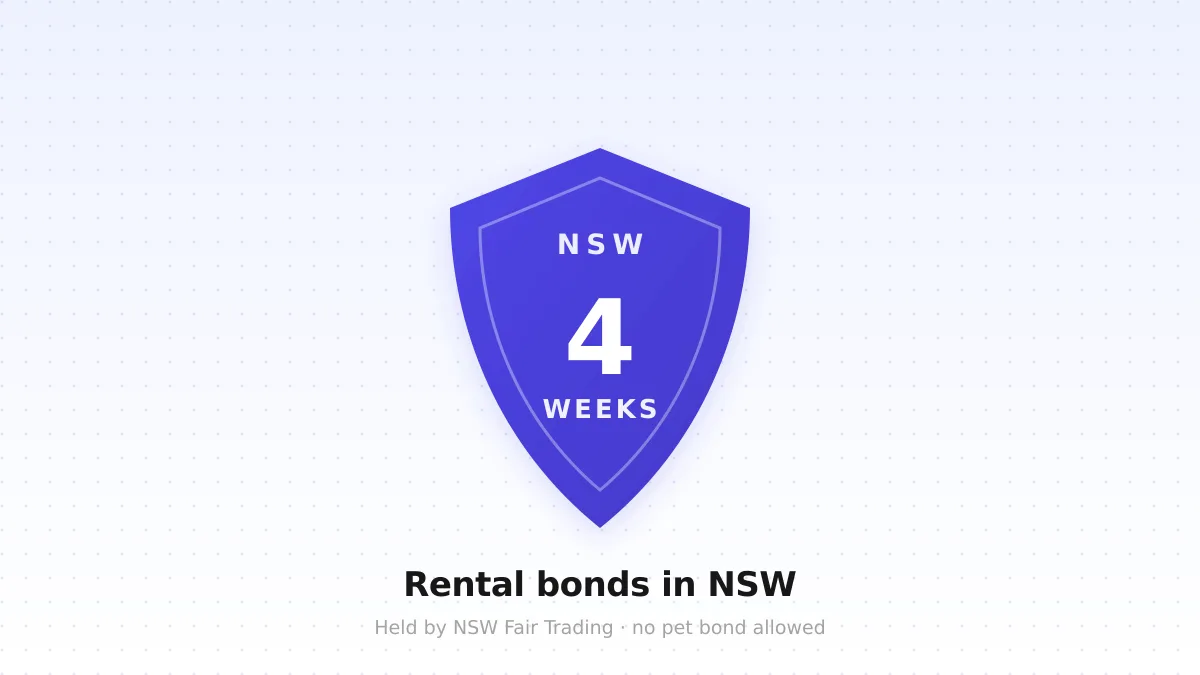
Four weeks’ rent, held by NSW Fair Trading, and no pet bond — that part is simple. The part that catches people out in a share house is that boarders and lodgers are not covered by the Act, so their bond has no statutory protection whatsoever.
If you are renting a room in New South Wales, there are two questions about your bond. The first — how much can they ask for — has a short answer. The second — is your bond protected — depends on something most people never think to check.
The numbers
| What | Maximum in NSW |
|---|---|
| Rental bond | 4 weeks’ rent |
| Rent in advance | 2 weeks |
| Holding fee | 1 week’s rent, and only after your application is approved |
| Pet bond | Not allowed. A separate bond for keeping a pet cannot be charged in NSW. |
There is no higher-rent exception. Four weeks is four weeks whether the room is $200 or $900 a week.
You also cannot be charged for a background check, for being shown the property, for the preparation of the tenancy agreement, or for your first set of keys. If any of those appear on an invoice, they are not enforceable.
Who holds it
Bonds in NSW are held by NSW Fair Trading, not by your landlord and not by the agent. You can pay it yourself through Rental Bonds Online, which is the option worth taking: you get an account, you can see that the money arrived, and you are notified when anyone tries to claim against it.
If someone asks you to transfer a bond to a personal account and says they will "look after it", that is not how bonds work here. Ask for the bond number.
The part that actually matters in a share house
The Residential Tenancies Act 2010 does not cover everyone living in a rented home. Which category you are in decides whether any of the above applies to you.
Co-tenant — everyone on one agreement
All of your names are on the same tenancy agreement. You are each fully covered, and you are also each liable for the whole rent, not just your share. One bond covers the household, so when somebody moves out you need a bond variation rather than a private cash handover — otherwise the person leaving is trusting the person staying to pay them back with nothing on paper.
Sub-tenant — you have an agreement with the head-tenant
The head-tenant is your landlord. You are covered by the Act in relation to them: the most they can require is four weeks of your rent, and if they take a bond they must lodge it with NSW Fair Trading. Get it in writing, and get the bond number.
Boarder or lodger — not covered
This is the one to watch. An agreement under which you board or lodge with somebody else is excluded from the Act entirely. No bond cap, no requirement to lodge your money anywhere, no tribunal to go to about it. If the arrangement is that you pay the owner who also lives there, meals or cleaning are included, and there is no written tenancy agreement, you may well be a lodger without ever having been told.
That does not make the arrangement bad — plenty of good rooms are let this way. It means the protection you are relying on is the other person’s good faith rather than the law, so behave accordingly: get a written agreement anyway, get a receipt for every payment, and ask them to lodge the bond with Fair Trading voluntarily. A person who refuses all three has told you something useful.
Getting it back
Bond disputes are won and lost on evidence gathered on the day you moved in, not on the day you moved out. Before you unpack: photograph every room, every existing mark, the inside of the oven, the state of the carpet, and the meter readings. Date-stamped photos and a completed condition report are the whole game.
At the end of the tenancy, either party can claim the bond through Rental Bonds Online. If a claim is made against you and you disagree, you dispute it rather than ignoring it — an unchallenged claim gets paid out. Unresolved disputes go to NCAT, the NSW Civil and Administrative Tribunal.
Recent changes worth knowing
- 31 October 2024 — rent can only be increased once in any 12-month period.
- 19 May 2025 — landlords need a valid reason to end a tenancy, and the grounds for refusing a pet are limited.
- 2 March 2026 — tenants can choose to pay rent by Centrepay.
Where these numbers come from
Every figure on this page was read off the official source below on 15 August 2026. Tenancy rules change — sometimes more than once a year — so if you are about to hand over money, spend two minutes confirming against the original.
- NSW Fair Trading — Costs at the start of a residential tenancy
- NSW Fair Trading — Residential rental bonds
- Tenants’ Union of NSW — Boarders and lodgers
- Tenants’ Union of NSW — Share housing
This is general information to help you ask better questions, not legal advice. If something has already gone wrong, your state tenancy authority and your local tenants advice service will both help you for free.