
Rental bonds in Australia: what you pay, and how to get it back
A bond is usually four weeks’ rent, it is not your landlord’s money, and most of the disputes over getting it back are decided by photos you took on day one. Here is how bonds actually work in each state.
A rental bond (also called a rental deposit or security deposit) is money you hand over at the start of a tenancy as security against unpaid rent or damage. It is the single biggest sum most renters pay upfront, and it is also the thing most people get wrong — not because the rules are complicated, but because nobody explains them until there is an argument.
How much is a bond?
In most of Australia the standard is four weeks’ rent. Some states cap it, some don’t, and the cap sometimes changes above a certain weekly rent.
| State / territory | Usual maximum bond | Held by |
|---|---|---|
| NSW | 4 weeks’ rent | NSW Fair Trading (Rental Bonds Online) |
| VIC | 1 month’s rent (higher rents may differ) | Residential Tenancies Bond Authority (RTBA) |
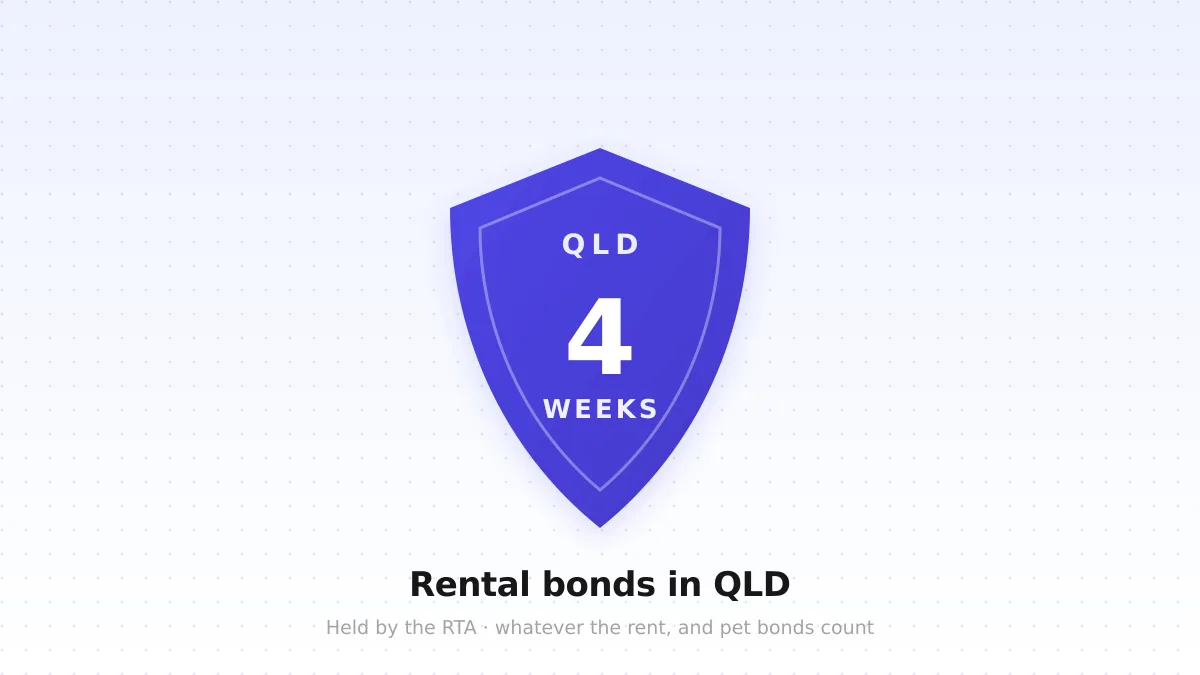
| QLD | 4 weeks’ rent | Residential Tenancies Authority (RTA) |
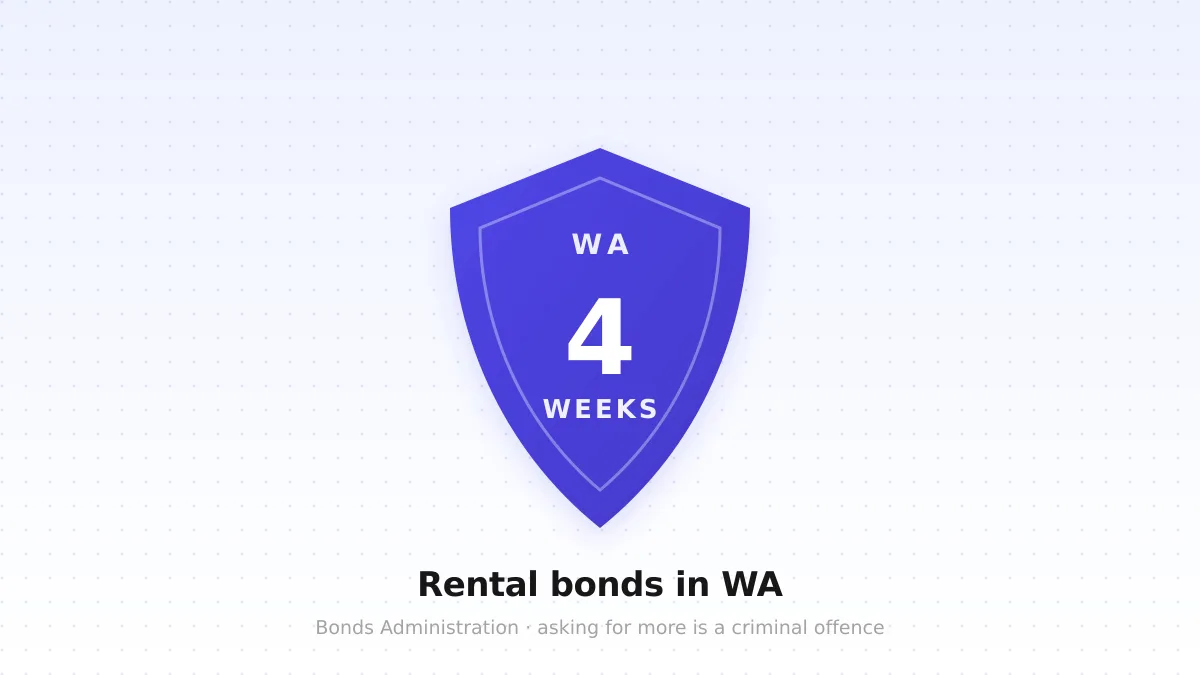
| WA | 4 weeks’ rent (plus pet bond) | Bond Administrator |
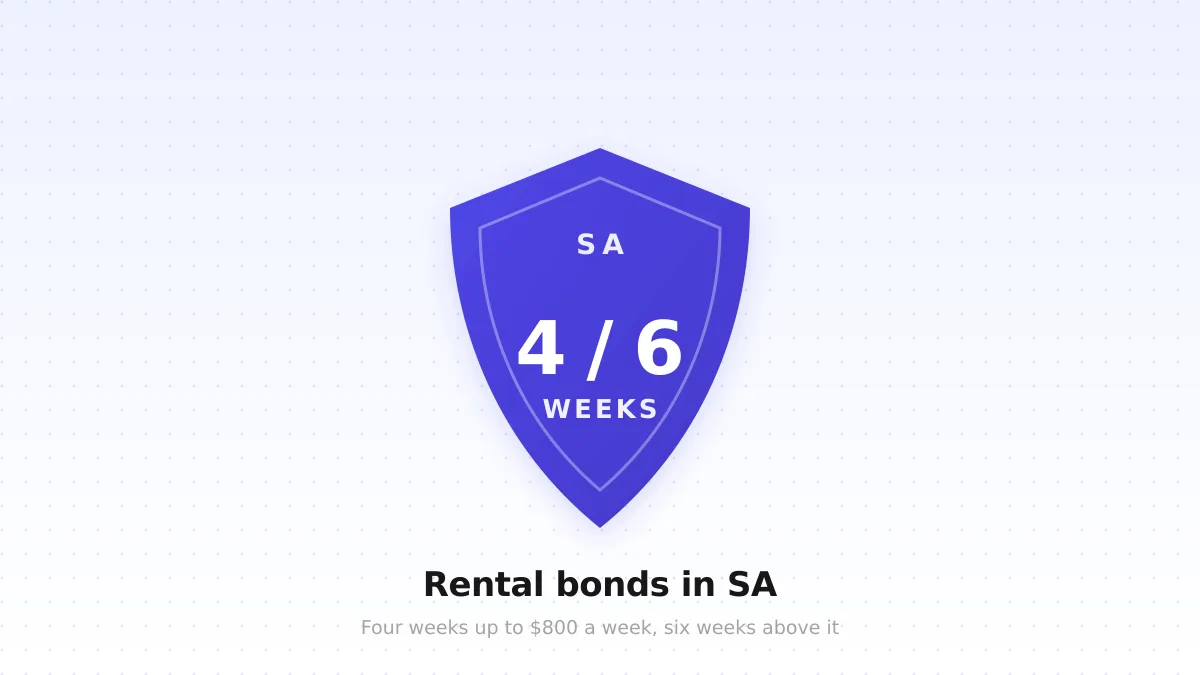
| SA | 4–6 weeks depending on rent | Consumer and Business Services |
| TAS / ACT / NT | 4 weeks’ rent | State bond authority |
Caps and thresholds change. Treat the table as orientation, not as law — the tenancy authority for your state is the source of truth, and every one of them publishes the current figure on a public page.
The part people miss: it is not the landlord’s money
In every Australian state and territory, your bond must be lodged with a government bond authority, not kept in the landlord’s or agent’s account. Lodgement usually has to happen within a set window — often 10 business days — and you should receive written confirmation with a bond number.
If you paid a bond and never received a lodgement confirmation, that is a problem worth chasing immediately. It is also one of the clearest signals of a rental scam.
What about sharehouses?
This is where it gets murky. If you are on the lease, your bond is lodged like anyone else’s. If you are a sub-tenant paying a head-tenant — very common in flatshares — the money you hand over may not be a formal bond at all, and it may not be protected by the bond authority.
Before you pay anything into a sharehouse, get three things in writing:
- Who is holding the money, and whether it has been lodged with the state authority
- Exactly what would be deducted, and in what circumstances
- How much notice you need to give to move out and get it back
A message thread saying this is worth far more than a handshake, and costs nothing to ask for.
Getting it back: the photos decide it
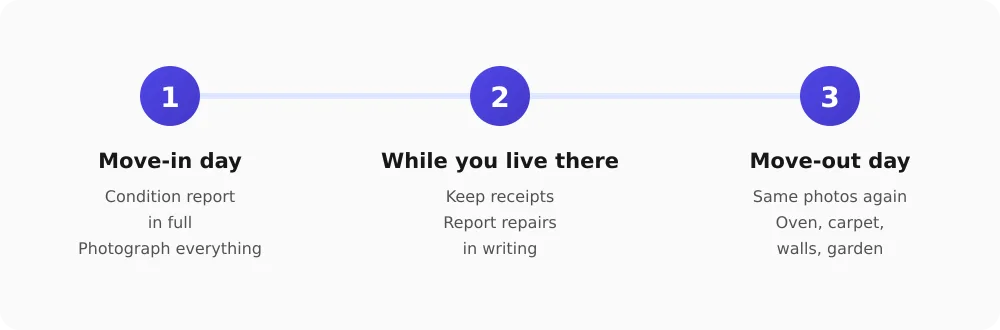
Bond disputes are almost never decided on who is more persuasive. They are decided on evidence about the property’s condition at the start versus the end, and the tenant who has that evidence wins.
On the day you move in
- Fill in the condition report properly. You usually have a short window (often 7 days) to return it. Do not tick "good" down the whole column to be polite — note every mark, stain, chip and scuff you can find.
- Photograph everything, with a timestamp. Walls, carpet edges, oven interior, inside cupboards, window tracks, bathroom grout, any existing damage. Overkill is the correct amount here.
- Email the photos to yourself or the agent. A dated email is stronger evidence than a phone gallery that could have been edited.
On the day you move out
Repeat the exact same process. Clean to the standard in the condition report — not to your own standard — and pay particular attention to the four things agents deduct for most often: oven, carpets, walls and the garden.
What can and can’t be deducted
Can be deducted: unpaid rent, cleaning to return the place to its starting condition, damage beyond fair wear and tear, missing items listed on the inventory, unpaid water usage where you’re liable for it.
Cannot be deducted: fair wear and tear. Carpet that has thinned in a hallway over three years, paint that has faded, a tap washer that has perished — these are the cost of owning a property, not your bill. The distinction is genuinely the whole game, and it is written into the legislation in every state.
If you disagree with a deduction
- Ask for itemised evidence — quotes, invoices, photographs. "General cleaning, $400" is not a claim, it is a number.
- Respond in writing, quickly. Most states give you a limited window to dispute a claim before the money is released by default.
- Escalate to the tribunal. NCAT in NSW, VCAT in Victoria, QCAT in Queensland, and their equivalents elsewhere. Filing fees are modest, you do not need a lawyer, and these tribunals deal with bond disputes constantly.
Tenants' unions and tenant advice services in every state give free advice on exactly this, and they are very good at it. Using them is normal, not dramatic.
The short version
- Expect four weeks’ rent, and confirm the current cap for your state
- Make sure it is lodged with the government authority, and keep the confirmation
- Photograph everything on day one and again on the last day
- Fair wear and tear is not deductible — know the difference
- Dispute in writing and quickly; the tribunal exists for this